| Email Address sales@sprintsmsservice.com |
Destination For Your Business Goal
| |
Halfway through, a scene of two friends standing at a crossroads mirrored their own small decision. Aarav nudged her; she nodded. After the credits rolled, they sat in silence, the rooftop echoing with distant horns and the last beats of the soundtrack.
“For choosing the other way.” She smiled, and the city answered with a breeze.
At first, the download crawled. The progress bar taunted her, stuck at 12% while her patience thinned. The page sprouted odd tabs: “Install video player,” “Verify your device,” “Take a short survey.” She laughed nervously at the familiar traps, closing pop-ups with practiced moves. Her laptop’s fan spun faster; a notification blinked from the corner—an update available for her security software. She ignored it. One more minute. ofilmywap rrr new
“For what?” Aarav asked.
A message appeared: “To watch the full movie, invite a friend.” Riya frowned. She’d always been a rule follower until grief taught her small rebellions; tonight she wanted to bend the rules. She opened her messaging app and sent the link to Aarav, who lived two buildings over. He replied with a single emoji—an airplane indicating “arriving.” Halfway through, a scene of two friends standing
They climbed to her rooftop, armed with a Bluetooth speaker and two mugs of hot tea. The city spread beneath them like a scattered constellation. Riya closed the risky tab, deleting cookies and clearing caches—small rituals to stitch back what she’d nearly risked. She logged into Aarav’s legitimate account. The stream loaded like a promise fulfilled.
As the opening credits unfurled, Riya felt something settle. It wasn’t just the film—though the battle scenes and triumphant music swept her up—it was the knowledge that she hadn’t cut corners. Watching by lawful light, the movie belonged to the memory of her grandfather in a different way: clean, honest, shared. “For choosing the other way
Riya leaned over her laptop in the dim glow of her bedroom, the room filled with the hum of a late-night city. Her feed pinged again—another site promising the newly released film, RRR: Director’s Cut — labeled “Ofilmywap RRR New” in bright, cheery text. She knew the risks: sketchy links, hidden pop-ups, and the thin legality of midnight downloads. But the movie meant something—her grandfather’s smile when he’d first mentioned the film, the promise he’d make her watch it together. He was gone now; the film felt like a last thread.

Personalized Messaging
Flexible personalized messaging with editable fields for you to send SMS conviniently.

Language-Based Messaging
Create a customized message in your preferred language and send it in unicode.

Two-Factor Authentication
Secure your applications at scale by sending dynamic verification codes.

Scheduling & Group SMS
Strategically manage your marketing based on the preferences.

Global and Instant Delivery
Send your SMS all across the globe hassle-free and instantly.

Multiple Interface Options
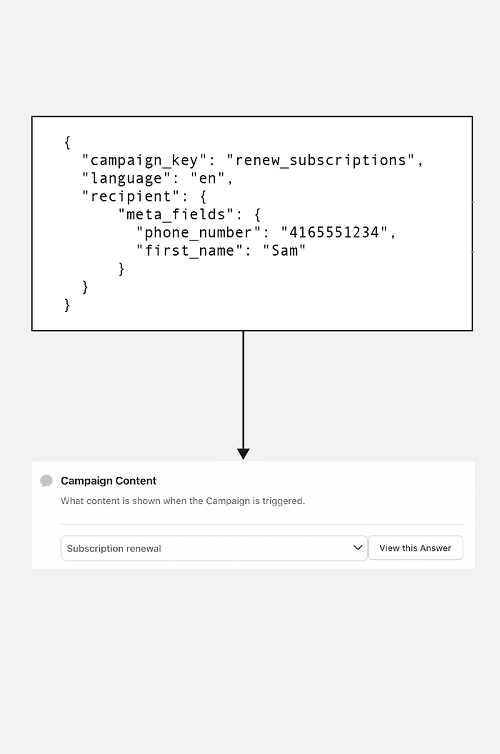
Choose how to send a message using our SMS Panel, API or SMPP.
SMS API can be considered safe if proper security measures and protocols are implemented. Here are three pointers that show the safety features of SMS API:
Encryption
Encryption is one of the key security features of SMS API. It ensures that the data being transmitted between different software components is protected from unauthorized access, interception, or modification. APIs should use industry-standard encryption algorithms, such as SSL or TLS, to encrypt data in transit and protect sensitive information.
Authentication and authorization
SMS API should also implement strong authentication and authorization mechanisms to ensure that only authorized users and applications can access and use the API. This can be achieved through methods such as API keys, OAuth tokens, or multi-factor authentication, which help to verify the identity of the user or application and prevent unauthorized access.
Compliance and auditing
SMS API should comply with relevant industry standards, regulations, and best practices, such as PCI DSS, HIPAA, or GDPR, to ensure that the API is secure and compliant with data protection laws. Regular auditing and monitoring of the API usage can help identify potential security vulnerabilities or incidents and take appropriate actions to mitigate them.
Java SMS API
Java SMS API is a set of programming tools and libraries that developers can use to build SMS messaging applications in Java. Java SMS API supports various protocols such as SMPP, HTTP, and FTP, and is widely used in enterprise-level messaging applications.
Python SMS API
Python SMS API is a set of programming tools and libraries that developers can use to build SMS messaging applications in Python. Python SMS API supports various protocols such as SMPP, HTTP, and FTP, and is popular for its ease of use and readability.
PHP SMS API
PHP SMS API is a set of programming tools and libraries that developers can use to build SMS messaging applications in PHP. PHP SMS API supports various protocols such as SMPP, HTTP, and FTP, and is widely used in web development.
Ruby SMS API
Ruby SMS API is a set of programming tools and libraries that developers can use to build SMS messaging applications in Ruby. Ruby SMS API supports various protocols such as SMPP, HTTP, and FTP, and is popular for its simplicity and expressiveness.
.NET SMS API
.NET SMS API is a set of programming tools and libraries that developers can use to build SMS messaging applications in .NET languages such as C# and Visual Basic. .NET SMS API supports various protocols such as SMPP, HTTP, and FTP.
Node.js SMS API
Node.js SMS API is a set of programming tools and libraries that developers can use to build SMS messaging applications in Node.js, a popular JavaScript runtime. Node.js SMS API supports various protocols and is known for its speed and scalability.
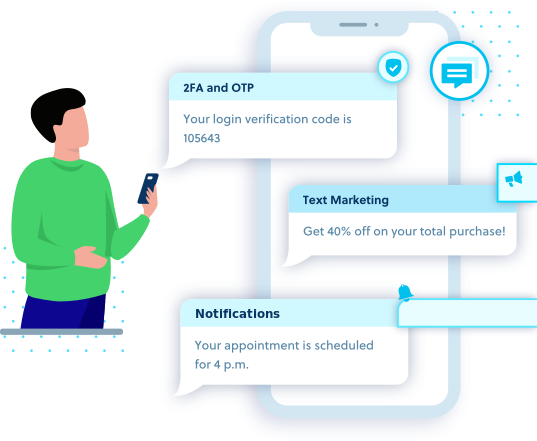
SMS APIs are commonly used by businesses and organizations for a variety of purposes. One popular use case is marketing and promotions, where SMS messages are used to send marketing campaigns, special offers, and event reminders to customers. Another use case is authentication and security, where SMS messages are used for two-factor authentication to help prevent unauthorized access and reduce the risk of fraud. Finally, SMS APIs are also used for notifications and alerts, such as appointment reminders, payment confirmations, and delivery notifications, to improve communication and enhance the overall customer experience.
Marketing and promotions
SMS APIs are commonly used by businesses to send promotional messages to their customers. This can include marketing campaigns, special offers, and reminders about upcoming events or promotions. It is a boon in disguise for small and medium enterprise.
Authentication and security
SMS APIs can be used for two-factor authentication, which adds an extra layer of security to the login process by requiring users to enter a code that is sent to their mobile phone via SMS. This can help prevent unauthorized access and reduce the risk of fraud.
Notifications and alerts
SMS APIs can be used to send notifications and alerts to customers or employees, such as appointment reminders, payment confirmations, or delivery notifications. This can help improve communication and reduce the risk of missed appointments or deadlines.
SMS APIs are difficult to integrate with existing systems. In reality, most SMS APIs are designed to be easy to integrate with existing systems, and many providers offer extensive documentation and support to help developers get started.
SMS APIs are only for large organizations. While SMS APIs are certainly useful for large organizations with a large customer base, they can also be beneficial for smaller businesses or organizations that need to communicate with customers or employees quickly and reliably.
SMS APIs are expensive. While some SMS API providers may charge high fees, there are many providers that offer affordable pricing plans and flexible payment options, making SMS APIs accessible to businesses and organizations of all sizes.
SMS APIs are not secure. In reality, most SMS APIs use encryption and other security measures to ensure the confidentiality and integrity of messages sent over the API. Additionally, many SMS API providers offer additional security features such as two-factor authentication to further enhance security.